Keru (কেৰু) is one of the most treasured pieces of traditional Assamese jewellery. Known primarily as a crescent-shaped ear ornament, Keru represents Assamese identity, heritage, and craftsmanship.
The design is believed to have origins connected to Tai-Ahom culture, where the term Keru has been recorded in early scripts.
Handmade by Assamese goldsmiths known as Sonari, Keru is admired for its detailed artistry, natural motifs, and cultural meaning that has been passed down through generations.
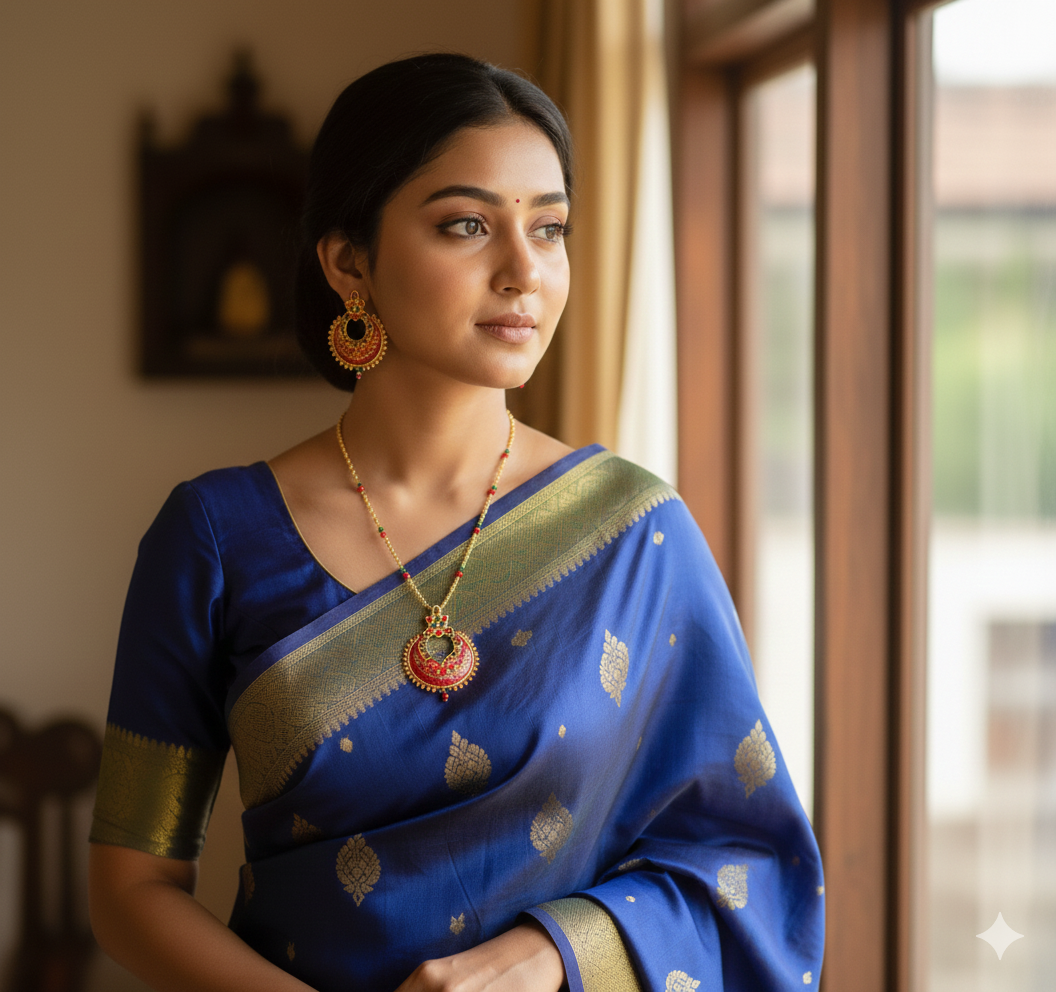
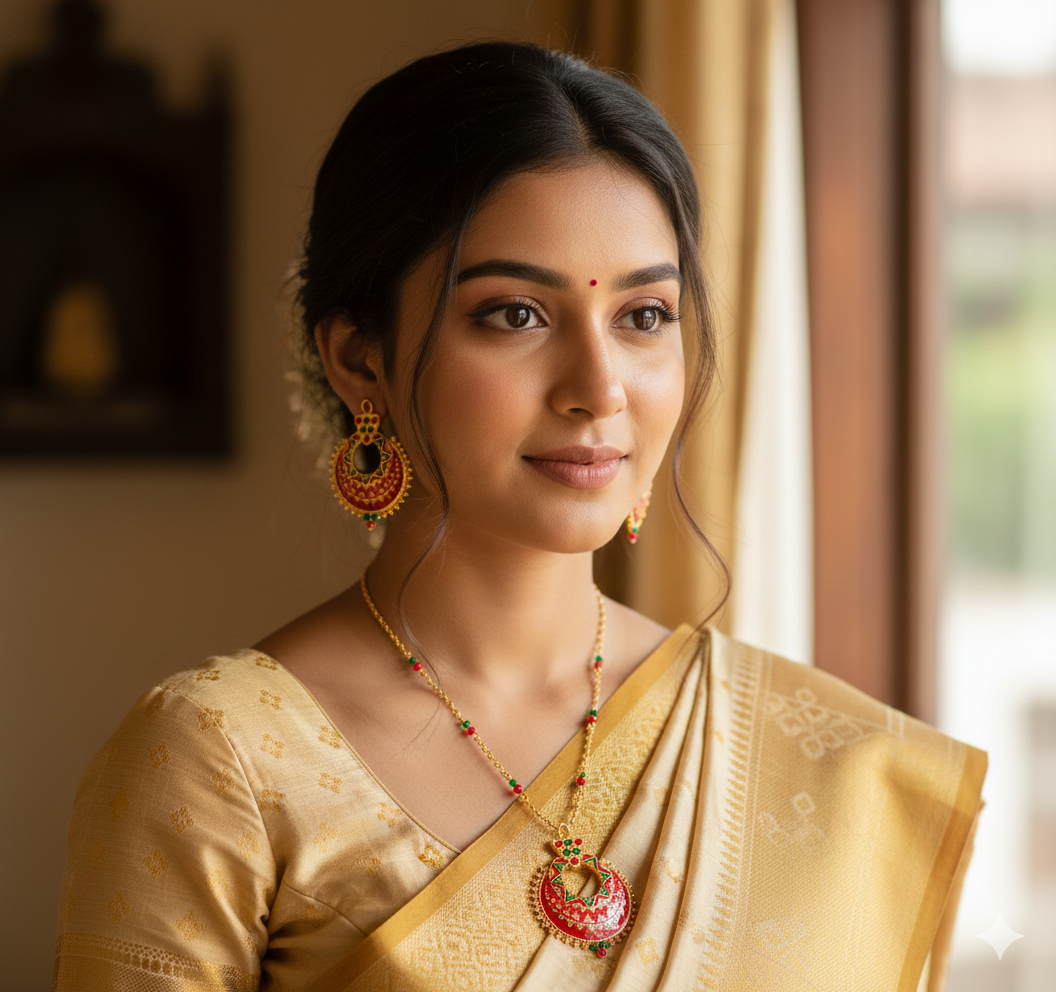
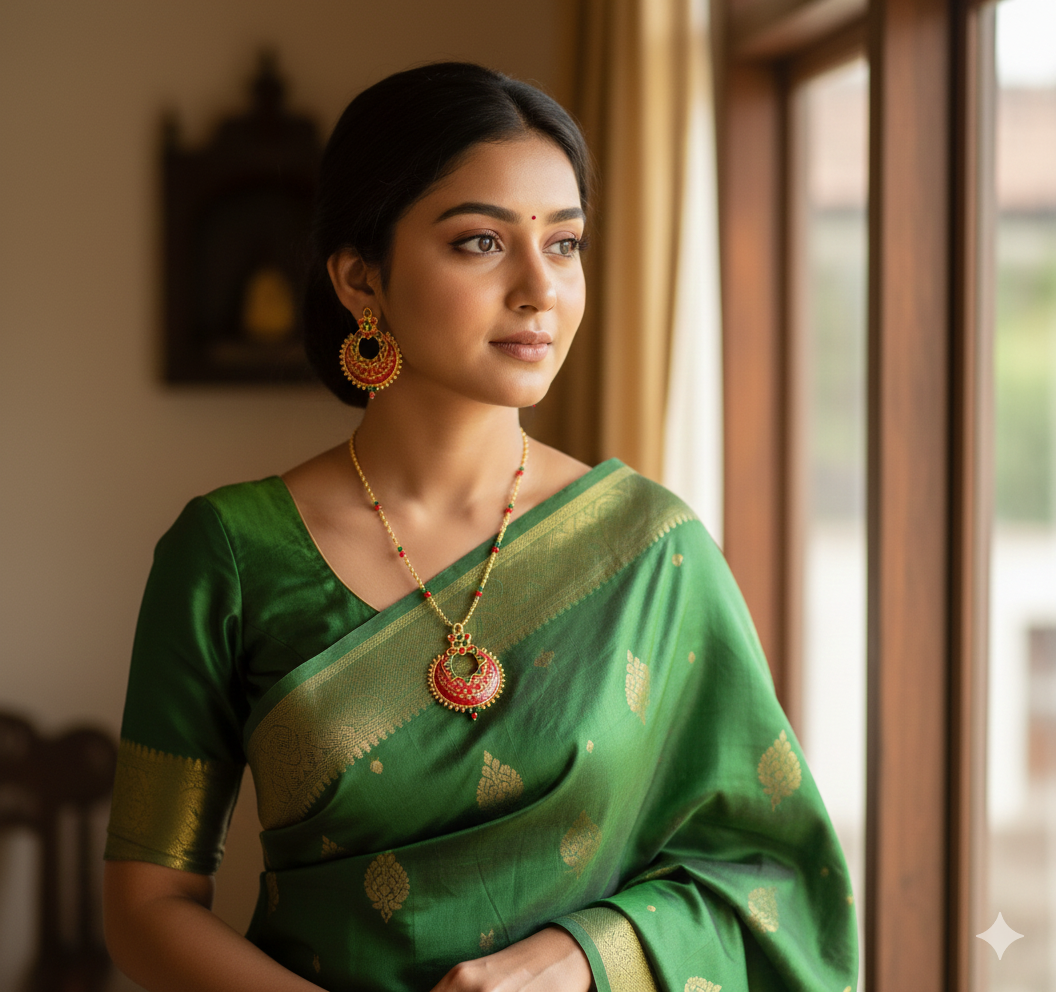
Origin & Cultural Background
Keru is traditionally linked to the Barpeta district of Assam, where it has been worn for centuries by older women as an everyday ornament and as a mark of cultural pride.
Historical Notes
- Keru was originally worn mostly by elder women of Barpeta.
- Over time, its use began to decline, but today Keru is experiencing a revival in a refined, more polished form.
- Now, Keru is worn across various districts including Nalbari, Kamrup, and Goalpara, especially during festive events such as Bihu, weddings, religious functions, and family ceremonies.
Many Sonari artisans say Keru is so old that it has traveled generation to generation, passed down from grandmother to granddaughter.
Design: Shape, Structure & Craftsmanship
Traditional Shape
Keru is easily recognized by its distinct:
- Crescent (half-moon) shape, OR
- A soft rounded-dome shape
At the bottom of the crescent, small bell-like ornaments (বেল-বুটামজাতীয়) are attached.
These tiny dangling pieces:
- Enhance the beauty of the earring
- Produce a soft jingling sound when worn
- Add movement and grace
This subtle sound is considered charming and is a signature feature of Keru.
How Keru Is Made
Traditionally:
- Keru is crafted entirely from pure gold (Kesha Xoon)
- Every piece is handcrafted by Sonaris without machine stamping
- No soldered “bakhra” joints were used in the earliest designs
In modern times, you can find:
- Gold Keru (সোণৰ কেৰু)
- Silver Keru (ৰূপৰ কেৰু)
- Gold-coated mixed-metal Keru (বাখ্ৰাম কেৰু)
- Jangfai Keru, Long Keru, and several regional variations
Artisans often include:
- Floral and leaf motifs
- Filigree detailing
- Traditional Assamese Minakari (enamel work)
- Semi-precious stones or artificial beads
- Rubies in classic premium Keru designs
Types of Keru (According to Region & Material)
According to traditional Assamese jewellery classifications (referencing artisans and scholars like Chaneki):
Common Variants
- Sona Keru – made of pure gold
- Rupa Keru – made of silver
- Bakhraam Keru – mixed metal with gold polish
- Jangfai Keru – unique regional style
- Long Keru – slightly elongated design
Each type carries the same crescent concept but differs in detailing, weight, and ornamentation.
Regional Popularity & Usage
Originally widespread in Barpeta, Keru’s popularity has expanded across many districts:
- Nalbari
- Kamrup
- Goalpara
- Bajali
- Parts of Lower Assam
Women wear Keru especially during:
- Bihu festivals
- Biya (weddings)
- Naam Kirtan and cultural functions
- Community celebrations
- Traditional dance events
Many Assamese families treat Keru as a heritage ornament, passing it down as a family heirloom.
Cultural Significance of Keru Jewellery
Keru is not just an ornament — it is a symbol of:
- Assamese womanhood
- Grace and elegance
- Cultural identity
- Traditional craftsmanship
Why Keru Has Cultural Value
- Represents the artistry of Assam’s Sonari community
- A part of the Assamese bride’s jewellery collection
- Signifies continuity and family heritage
- Appears in folklore, traditional attire, and old Assamese cultural practices
In many Assamese families:
Keru is gifted by grandmothers to their granddaughters, symbolizing blessings, protection, and tradition.
This act strengthens emotional bonds and preserves Assamese heritage.
Modern Adaptations of Keru
Today, Keru is not limited to earrings.
Modern designers create:
- Keru pendants
- Keru-inspired necklaces
- Lightweight daily-wear versions
- Fusion jewellery mixing modern and traditional aesthetics
This makes Keru attractive to younger generations and suitable for both festive and casual wear.
Materials Used Today
While traditional Keru is made of pure gold, modern versions use:
- Gold-coated silver
- Silver alloys
- Copper mixed with gold plating
- Artificial stones
- Synthetic beads
These modern materials make Keru more affordable without losing its cultural authenticity.